
Christendom's Poisoned Legacy: Empire-Building and Spiritual Control in Today's Pentecostal Churches – My Reckoning
Behind the revival flames: empire tactics that break leaders, exploit pioneers, and hand ministries to family dynasties. How Christendom's shadow fuels spiritual abuse in modern charismatic circles—and why we must confront it now.
UNSETTLING TRUTHSCRITICAL REFLECTIONS & DECOLONIAL INQUIRY
Joe Quarcoo
1/20/20266 min read
Christendom's Poisoned Legacy: Empire-Building and Spiritual Control in Today's Pentecostal Churches – My Reckoning
In my first piece for this series—"Unsettling Truths: Why This Book Is Shaking My Ministry to Its Core"—I confronted the historical fusion of church and empire: the Doctrine of Discovery's papal-sanctioned conquest, the dehumanization it justified, and the way Christendom twisted a humble faith into imperial power. Mark Charles and Soong-Chan Rah exposed how this legacy didn't vanish—it mutated, embedding a theology of white supremacy and exceptionalism into American Christianity and beyond.
Now, the book compels me to turn the lens inward, to the modern church I inhabit as an ordained Reverend Minister. Particularly in certain Pentecostal and charismatic evangelical circles, we've seen a chilling continuity: leadership roles once meant for service—Apostles, prophets, pastors, teachers—morphing into positions of unchecked control. What parades as "spiritual authority" rooted in Scripture too often becomes psychological manipulation, religious coercion, financial exploitation, and, in the darkest cases, physical and sexual abuse. This isn't isolated scandal; it's the insidious echo of Christendom, where power consolidates over people rather than empowers them.
The uncomfortable truth hits hard: sincere believers seeking deeper connection with God are drawn into systems that demand blind loyalty, silence dissent, and treat congregants as extensions of a leader's vision rather than autonomous image-bearers of Christ. Numbers—bigger crowds, global reach, tithe streams—become metrics of divine favor, distorting the Gospel's core call to liberation.
This forces brutal questions: Where is the line between biblical eldership for edification (Ephesians 4:11–13) and the usurpation of personal autonomy? How do we disciple authentic followers of Jesus when power-hungry leaders dominate the narrative? And why does this pattern thrive in movements that emphasize the Spirit's gifts—prophecy, healing, apostolic calling—yet weaponize them for control?
Unsettling Truths equips me to name it: these dynamics mirror the Doctrine of Discovery's logic. Just as European Christians declared non-Christian lands "discoverable" and their peoples subhuman, some modern leaders declare their "anointing" as unassailable, rendering followers' discernment irrelevant. The result? Empire-building disguised as revival.
The Gritty Reality: Patterns of Spiritual Abuse in Pentecostal and Charismatic Spaces
Recent years have ripped the veil off this darkness. High-profile scandals reveal systemic issues, not anomalies.
In the UK, the Mike Pilavachi case (Soul Survivor) exposed a pattern of coercive control: a celebrated charismatic leader using spiritual authority to manipulate young men into inappropriate physical contact—massages, wrestling—under the guise of mentorship. Victims described a culture where questioning the leader equated to resisting God, silencing whistleblowers through fear and shame. The Church of England's investigation substantiated "systematic coercive and controlling behaviour," highlighting how "spiritual authority" can cloak abuse.
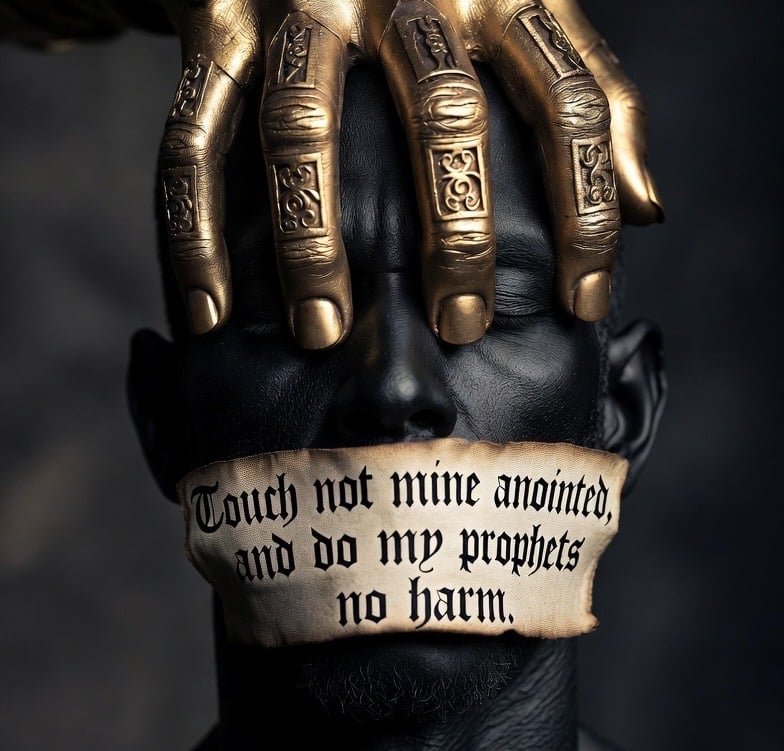
Globally, the pattern repeats. Mike Bickle (International House of Prayer) faced decades-long allegations of sexual misconduct, with defenders framing exposure as "spiritual attack." In the Assemblies of God—the world's largest Pentecostal denomination—investigative reporting uncovered a 50-year history of shielding accused predators, resisting mandatory safeguards in favor of "local autonomy" and "forgiveness." Pastors twisted Scripture ("Touch not the Lord's anointed") to intimidate victims, while charismatic gifts were treated as proof of divine favor, making leaders untouchable.
These aren't fringe; they're structural. Studies and survivor accounts describe common tactics: micromanaging lives, demanding excessive accountability, using prophecy to control decisions (who to marry, where to work), shaming doubters, and prioritizing the leader's brand over congregational healing. In some apostolic networks, "submission" becomes code for unquestioned obedience, echoing Christendom's hierarchical power over the early church's mutual servanthood.
Re-Evaluating Heroes: Lincoln and the Cost of "Progress"
This modern crisis sharpens my re-reading of historical figures through Unsettling Truths. Abraham Lincoln, long hailed as the Great Emancipator, emerges as a tragic contradiction. While he ended legal chattel slavery, his policies toward Native Americans were devastating: nullifying treaties, ordering forced removals, and expanding executions during the Dakota War (resulting in the largest mass hanging in U.S. history). Charles and Rah argue Lincoln operated within the Doctrine of Discovery framework—viewing Indigenous peoples as obstacles to Manifest Destiny, a theological heir to papal decrees.
The book dismantles the "white messiah" narrative: progress built on dispossession and dehumanization. Lincoln's legacy reminds us that even "heroic" figures can perpetuate systemic evil when embedded in flawed theologies. Today, when charismatic leaders promise revival while consolidating power, we risk the same: spiritual "progress" that leaves broken lives in its wake.
Wrestling with Christendom's Paradox: Influence vs. Entanglement
Here's the most unsettling tension: Could Christendom's legacy—despite its horrors—offer any strategic value in a secularizing world?
In the UK, institutions like the Church of England retain cultural weight, public voice, and infrastructure from centuries of state-church fusion. Without this, would Christianity be perpetually marginalized—an underdog drowned out by secularism? Other faiths, like Islam, demonstrate assertive global influence through collective structures. In an era where secular powers seek to sideline religious voices, does dismantling Christendom entirely risk rendering the church voiceless in the public square?
This isn't defense of abuse—historical atrocities remain indefensible. But it's honest grappling: Power enables advocacy (charity, justice campaigns, moral witness). Yet entanglement corrupts. The church's "influence" too often becomes domination, as seen in colonial missions or modern scandals.
The Gospel demands a different path: influence through humble service, prophetic truth-telling, and solidarity with the oppressed—not coercion. Jesus rejected imperial power (John 18:36), modeling kenosis—emptying Himself for others. True relevance comes not from structural dominance but from embodied liberation.
A Call to Reclaim Gospel Freedom
As a minister shaped by decolonial lenses and frontline ministry, my resolve hardens: I will not align with visions prioritizing empire over empowerment. My calling is radical liberation—equipping believers to discover their purpose in Christ, free from control.
This requires:
Accountability structures that hold leaders to servant-leadership.
Teaching that emphasizes mutual submission (Ephesians 5:21).
Spaces where discernment is encouraged, not punished.
Lament and repentance for abuses, centering survivors.
True transformation starts with unsettling truths—the courage to confront history and its echoes. The personal cost is high: challenging entrenched narratives invites backlash. Yet the Gospel's freedom is worth it.
What "unsettling truths" have shattered your assumptions about leadership or faith? How do we discern authentic authority from power-driven agendas? How should the church wield influence without repeating Christendom's sins?
I'm still in the thick of this journey. Your reflections are vital—share them. Together, we reclaim a faith that liberates.
#Christendom #SpiritualAbuse #PentecostalReckoning #DecolonizingLeadership #GospelFreedom #UnsettlingTruths #FaithAndJustice #PublisherReviewSeries #GuidingLightPress #LiteratureofLiberation
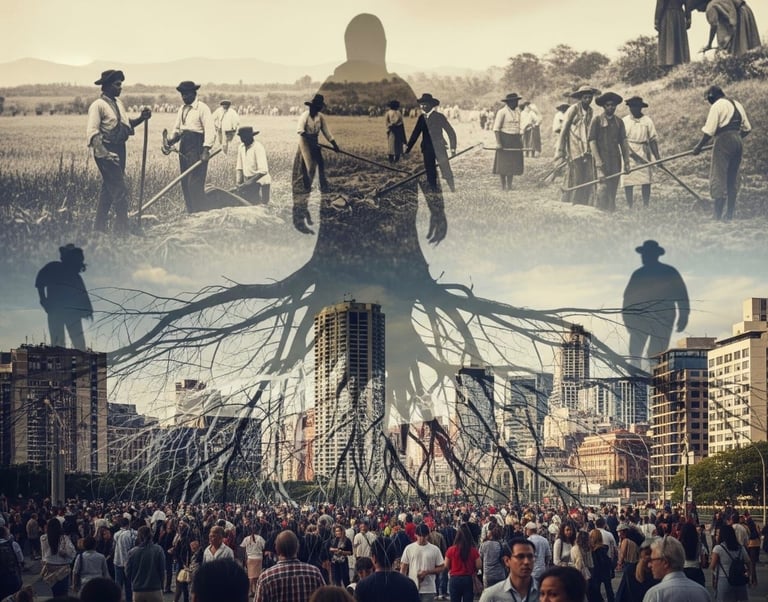
In certain rapidly expanding charismatic networks, a particular model dominates: the aggressive deployment of "lay ministers" to plant branches. Founding Bishops invoke the early church's use of everyday believers to spread the Gospel, framing it as biblical and efficient. But in practice, this becomes a sophisticated system of extraction and control.
Young, zealous members—often full of passion for souls—are mobilized as unpaid or minimally supported "tent-makers" to pioneer new congregations. They pour in their time, energy, finances, and social networks, sacrificing careers, family stability, and personal resources to build thriving branches from scratch. When the church grows, gains momentum, or becomes financially viable, the founding leader frequently intervenes: the pioneer is abruptly transferred elsewhere, replaced by a more "loyal" appointee from headquarters, or sidelined entirely.
Refusal to comply? The response is swift and severe. The pastor who built the work—often over years of sweat and sacrifice—is labeled disloyal, rebellious, or divisive. They face public shaming, ostracism, excommunication from the network they helped expand, and sometimes formal bans that cut them off from fellowship. In the most toxic cases, the founding authority pronounces spiritual curses or declares divine judgment on the "disobedient," weaponizing biblical language about loyalty to instill fear and silence dissent.
This isn't isolated. Many young charismatic ministries worldwide now emulate this blueprint, viewing rapid multiplication as proof of anointing while treating people as interchangeable tools in a corporate expansion strategy. The result? A trail of broken leaders, fractured communities, and disillusioned believers who once trusted the call to "go and make disciples" only to discover they were building someone else's empire.
The empire mentality extends to succession. In these systems, long-serving senior pastors—who labored alongside the founder to establish and sustain the network—are routinely bypassed when leadership transitions loom. Instead, the ministry is handed down to biological children or close family members, often with little regard for merit, calling, or the sacrifices of those who built the foundation. This nepotism cloaked as "anointing" or "legacy" perpetuates dynastic control, echoing the feudal hierarchies of Christendom where power was inherited, consolidated, and protected rather than shared in mutual servanthood.
These tactics aren't anomalies; they're structural features of a leadership paradigm that prioritizes institutional growth, brand loyalty, and centralized authority over genuine empowerment. They mirror the Doctrine of Discovery's logic: declare a territory (a city, a demographic), send "discoverers" (lay pioneers) to claim it through sacrifice, then extract value and reassign control when profitable. The human cost—burnout, betrayal, spiritual trauma—is dismissed as the price of revival.
This is spiritual abuse defined: coercion and control in a religious context, where leaders wield Scripture, charisma, position, and even threats of divine curse to dominate rather than liberate. It thrives in environments of high emotion, celebrity culture, unchecked authority, and a theology that equates numerical expansion with God's favor—precisely where the Spirit’s gifts should foster freedom, not chains.
REACh out
hello@guidinglightpress.co.uk
© 2026. All rights reserved.
Address: 4th Floor, Silverstream House, 45 Fitzroy Street, London, W1T 6EB
Amplifying voices and reclaiming narratives through literature of liberation
Privacy Policy


Join the movement