
Unsettling Truths: Dismantling the Myths of Christendom, Colonialism, and White Supremacy
From papal bulls to broken treaties and segregated pews, this review rips open how centuries of theological supremacy continue to choke genuine evangelism in the post-colonial West
De Quarcoo
1/15/20266 min read
In the shadowed corridors of history, where faith collides with empire, Mark Charles and Soong-Chan Rah's Unsettling Truths: The Ongoing, Dehumanizing Legacy of the Doctrine of Discovery rips open the festering wounds of American exceptionalism and Christian complicity. As a Ghanaian ordained Reverend Minister navigating the fractured spiritual landscape of the UK, this book didn't just educate me—it gutted me, forcing a raw confrontation with the toxic doctrines that have poisoned global Christianity for centuries. What began as a personal wrestle with evangelizing unchurched White British natives evolved into a brutal excavation of historical trauma, revealing how the ghosts of Manifest Destiny, slavery, and colonialism still haunt our pulpits and policies. This review, part of my Publisher Review Series, isn't a polite nod to academia; it's a call to arms against the delusions that continue to justify domination in the name of God.
Manifest Destiny: Divine Right or Imperial Theft?
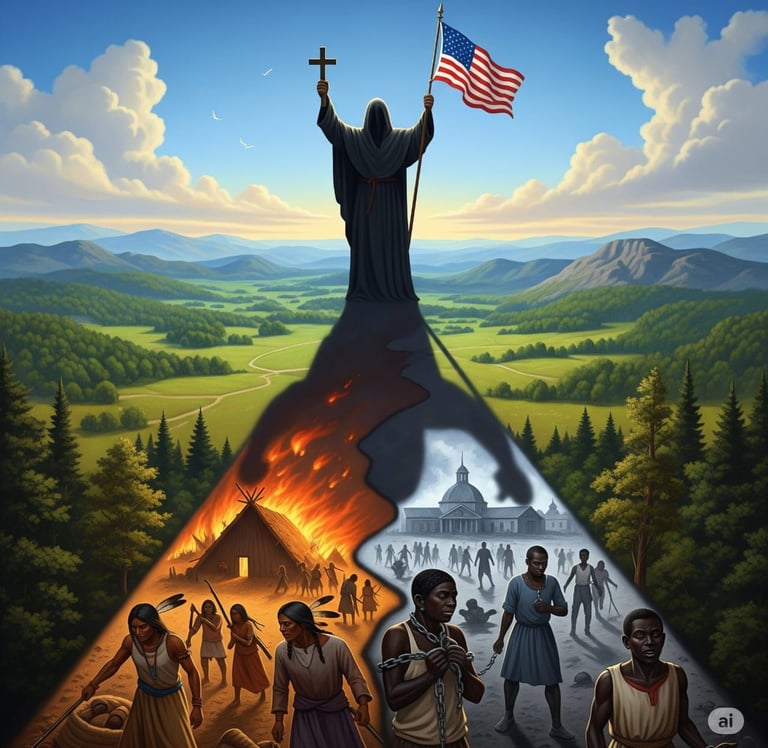
Let's cut through the romanticized bullshit: Manifest Destiny wasn't some noble vision of progress—it was a holy war disguised as destiny, a theological hammer wielded by white settlers to smash Indigenous sovereignty into dust. Coined in the 1840s by journalist John L. O'Sullivan, it proclaimed the "obvious fate" of the United States to sprawl from the Atlantic to the Pacific, civilizing the "wilderness" in God's name. But as Charles and Rah unflinchingly expose, this wasn't mere political opportunism; it was the Doctrine of Discovery in boots-on-the-ground action, a papal edict from the 15th century that granted European Christians the divine license to conquer, convert, or kill non-Christians.
Picture this: Anglo-Saxon Protestants, armed with Bibles and bayonets, marching westward under the banner of superiority. They weren't just expanding territory; they were enacting a scripted apocalypse for Native peoples, whose lands, lives, and legacies were deemed expendable. The Doctrine, rooted in papal bulls like Inter Caetera (1493), asserted that "discovery" by Christians nullified Indigenous rights—turning theft into providence. Manifest Destiny amplified this, infusing it with a distinctly American flavor of racial hierarchy. White supremacy wasn't a side effect; it was the engine. As Rah details, this embedded theology positioned whites as God's elect, tasked with "redeeming" the continent from "savages." The result? Genocide, forced removals like the Trail of Tears, and a litany of broken treaties that echo in today's Indigenous struggles for justice.
Even icons like Abraham Lincoln, often lionized as the Great Emancipator, swam in these polluted waters. As we explored in prior reflections, Lincoln's policies toward Native Americans—authorizing the largest mass execution in U.S. history during the Dakota War of 1862—reveal how deeply Manifest Destiny's mindset infiltrated leadership. It wasn't hypocrisy; it was the system working as designed, prioritizing white expansion over human dignity. Charles, a Navajo theologian, brings this home with visceral clarity, weaving personal ancestry into the narrative to show how these doctrines aren't abstract—they're bloodstained legacies that demand reckoning.
From my vantage as an African in the diaspora, this American saga hits like a mirror to my own history. Manifest Destiny is the ugly twin of European colonialism and the transatlantic slave trade, both fueled by the same twisted theology. In Ghana, my homeland, British colonizers invoked divine mandate to plunder resources and souls, shipping millions across the Atlantic in chains. The "civilizing mission" rhetoric? Identical playbook. White Christians as saviors, non-whites as subhuman fodder for empire. The cost: generational scars, from stolen artifacts in British museums to the economic disparities that still strangle African nations. It's not history—it's a living wound, festering in global inequalities and the rise of neo-colonialism.
And don't think it's confined to the past. The echoes of Manifest Destiny reverberate in modern expansionism, from U.S. foreign policy interventions to the resurgence of white nationalism. Post-2016 America saw Black communities arming themselves against emboldened supremacists, a grim reminder that narratives of divine entitlement breed violence. In the UK, Brexit's undercurrents of exceptionalism mirror this, pitting "native" Brits against immigrants in a zero-sum game of belonging. How do we dismantle these delusions? It starts with naming them—not as relics, but as active forces shaping borders, ballots, and bigotries. Charles and Rah challenge us: Confront the unsettling truths, or perpetuate the cycle.
The Embedded Theology of White Supremacy: A Poisoned Well
Dig deeper, and Unsettling Truths exposes the rotten core: an embedded theology of white supremacy that has corrupted Christianity from within. This isn't fringe heresy; it's the foundational myth that blended faith with racial dominance, turning the Gospel into a tool of subjugation. Charles and Rah trace it back to the Doctrine of Discovery, but they don't stop there—they show how it metastasized into every facet of Western society.
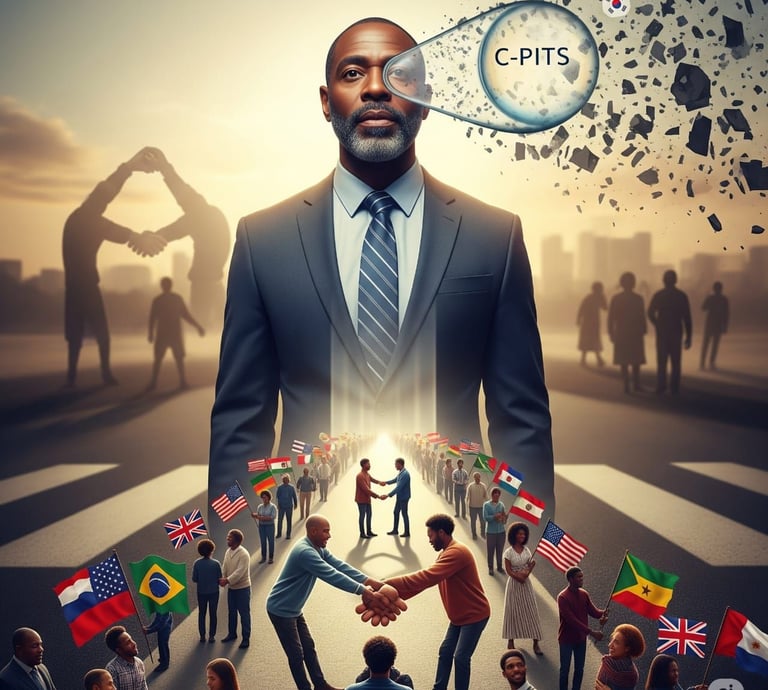
In the American context, Manifest Destiny sanctified white settlers as God's instruments, dehumanizing Indigenous peoples as obstacles to divine will. This theology didn't just justify land grabs; it erased cultures, languages, and spiritualities. Boarding schools like Carlisle Indian Industrial School, with their motto "Kill the Indian, Save the Man," were Christendom's laboratories for assimilation—ripping children from families to mold them into "civilized" Christians. The trauma? Intergenerational, manifesting as C-PITS (Complex Post-Indigenous Traumatic Stress), a term Rah employs to describe the compounded wounds of historical violence.
But the poison spread globally. As a Ghanaian, I see parallels in how British missionaries "saved" Africans while enabling empire. The slave trade's architects quoted Scripture to defend chattel slavery, branding Blacks as cursed descendants of Ham. This embedded supremacy lingers in church structures: segregated congregations, where white-led denominations hoard power while Black and Brown churches thrive on the margins. Rah's Korean-American perspective adds layers, highlighting how Asian immigrants navigate similar exclusions.
The book's power lies in its unflinching psychology. Historical trauma isn't just emotional—it's epigenetic, altering how communities respond to oppression. For evangelists like me, this explains the resistance I encounter among White British natives: a subconscious fortress built from centuries of privilege, making the Gospel from a "foreigner" seem threatening. Charles urges deconstruction: Strip away the supremacist layers to reclaim a Jesus who sided with the marginalized, not the mighty.
Yet, deconstruction alone isn't enough. We must confront how this theology fuels contemporary crises—from police brutality against Black bodies in the U.S. to anti-immigrant policies in Europe. The 2020 George Floyd protests? A direct backlash against Manifest Destiny's heirs. As Rah notes, true reconciliation demands reparations, not rhetoric—land back for Natives, economic justice for descendants of slaves. Anything less is complicity.
Reverse Mission: The Irony of Evangelizing the Evangelizers
Now, pivot to the paradox that Unsettling Truths illuminates: reverse mission in a post-colonial world. The West, once the epicenter of Christian export, now grapples with secularism and declining faith. Ironically, it's the Global South—Africa, Asia, Latin America—that sends missionaries back, armed with vibrant faith forged in the fires of colonialism.
As a Reverend from Ghana ministering in the UK, I'm part of this wave. But Charles and Rah reveal the barriers: embedded white supremacy that views non-white evangelists as inferior. "Reverse mission" sounds empowering, but it's often met with suspicion. White congregations, steeped in historical privilege, resist leadership from those they once colonized. This manifests in segregated churches: dying white parishes alongside thriving African ones, divided by race and culture.
The ache is personal. My burden is reaching unchurched White Brits—not recycling believers, but igniting genuine transformation. Yet, the Gospel from my lips hits walls built by centuries of supremacy. Rah's concept of "laminated identities" helps: Whites carry unexamined layers of privilege, making vulnerability to "other" messengers rare. Charles adds Indigenous wisdom, warning against replicating colonial models in mission.
So, how do we re-Christianize the West? It demands radical unity—dismantling racial silos for integrated worship. But unity without justice is illusion. Missionaries from the South must challenge supremacy head-on, modeling a decolonized Gospel. In the UK, this means addressing Brexit's xenophobia, where "British" faith excludes immigrants. Globally, it's confronting how U.S. evangelicals export culture wars, blending faith with nationalism.
The book doesn't offer easy answers, but it demands action: Repent of Christendom's sins, embrace mutuality. As Kwiyani's podcast and Niringiye's recommendation led me here, perhaps this review sparks your own reckoning. Can the Church transcend its fractured past?
Conclusion: Liberation Through Unsettling Reckoning
Wrapping this journey with Unsettling Truths, the book's framework has shattered my illusions, equipping me to navigate evangelism's minefield. From the Doctrine's justifications to Manifest Destiny's atrocities, from white supremacy's grip to reverse mission's hurdles—every thread connects to my struggle in the UK.
This isn't abstract theology; it's a blueprint for liberation. Understanding Historical Trauma and C-PITS explains the resistance: Whites, beneficiaries of empire, subconsciously guard their worldview. For me, a Ghanaian in diaspora, it's clarity amid chaos—why my calls to faith often echo unanswered.
Yet, hope flickers. The Gospel, stripped of supremacy, is revolutionary—empowering the oppressed, humbling the powerful. My series aimed to process this publicly, linking American history to African scars, urging collective deconstruction.
What reshaped you? Share your truths; let's dismantle the walls together. In facing the grit, we find freedom
Mark Charles Soong-Chan Rah Harvey Kwiyani, Ph.D. Dr D Zac Niringiye Ruth Padilla DeBorst Sabrina Ben Salmi BSc FRSA Anna Selmeczi Faranak Miraftab Leila Harris
#UnsettlingTruths #RacialJustice #TraumaInformed #CPITS #HistoricalTrauma #WhiteFragility #RacialReconciliation #CollectiveResponsibility #Theology #SocialPsychology #DeJoeQuarcoo #ComplexConversations #Consciousness #Accountability #UK #SouthAfrica #ColonialLegacy

REACh out
hello@guidinglightpress.co.uk
© 2026. All rights reserved.
Address: 4th Floor, Silverstream House, 45 Fitzroy Street, London, W1T 6EB
Amplifying voices and reclaiming narratives through literature of liberation
Privacy Policy


Join the movement